The avalanche danger scale.

Every avalanche bulletin in Europe rates the danger on the same five levels, defined by the European Avalanche Warning Services (EAWS). Each level describes how stable the snowpack is, how easily an avalanche can be triggered, and what size of natural avalanche to expect.

Five levels.

The rating describes the snowpack, not your skill. The same level can mean very different things on a 25° slope and a 40° couloir.

Level 1

Low

faible
What to do Travel normally.

Conditions are generally good. Watch for isolated pockets on extreme slopes and above terrain traps.

EAWS definition
Snowpack
Generally well bonded and stable.
Triggering
Possible mainly with high additional loads, on isolated extremely steep slopes.
Natural avalanches
Only small and medium-sized natural avalanches are possible.
Level 2

Moderate

limité
What to do Choose routes carefully.

Conditions are mostly good. Take care on the aspects and elevations the bulletin highlights, and cross steep slopes one at a time.

EAWS definition
Snowpack
Moderately well bonded on some steep slopes, otherwise well bonded.
Triggering
Possible mainly with high additional loads, particularly on the steep slopes named in the bulletin.
Natural avalanches
Very large natural avalanches are not expected.
Level 3

Considerable

marqué
What to do Be selective.

Avoid the steep slopes the bulletin names unless you have strong avalanche experience. When in doubt, choose simpler terrain.

EAWS definition
Snowpack
Moderately to weakly bonded on many steep slopes.
Triggering
Possible even with a low additional load, such as a single skier, particularly on the named steep slopes.
Natural avalanches
Some medium and occasionally large natural avalanches are possible.
Level 4

High

fort
What to do Stay out of avalanche terrain.

Keep to gentle slopes with nothing steep above you, or pick another day.

EAWS definition
Snowpack
Weakly bonded on most steep slopes.
Triggering
Likely even with a low additional load, on many steep slopes.
Natural avalanches
Numerous medium and often large natural avalanches can be expected.
Level 5

Very high

très fort
What to do Stay home.

Avoid all avalanche terrain, including valley paths and roads that large avalanches can reach.

EAWS definition
Snowpack
Poorly bonded and largely unstable in general.
Triggering
Not the main concern: avalanches release on their own.
Natural avalanches
Numerous very large and often extremely large avalanches, even in moderately steep terrain.

The words behind the levels.

Bulletins use a few terms with precise meanings. These are the EAWS definitions.

Slope steepness

0°30°40°50°
  • 0–30°Moderately steep
  • 30–40°Steep
  • > 40°Extremely steep
  • ~38°Most common start

Slab avalanches that catch people usually start on slopes of 35 to 45°, most often around 38°. Below 30° they are rare. Extreme terrain also covers slopes close to ridges, with an unfavourable shape or rough ground.

Additional loads

Low load

Gentle and spread out
  • One skier turning smoothly
  • A snowshoer
  • A group spaced 10 m apart
Can trigger from level 3, Considerable

High load

Heavy or sudden
  • Skiers close together
  • A skier falling
  • A snowmobile or explosives
Can trigger from level 1, Low

Aspect and elevation

N E S W

Aspect

Which way a slope faces. The rose shows the aspects where the danger is highest.
2,200 m

Elevation

How high the slope is. Danger can change with altitude, so bulletins may rate it above and below a set height.

Avalanche size

  • 1SmallUnlikely to bury a person, except in terrain traps.
  • 2MediumCould bury, injure or kill a person.
  • 3LargeCould bury and destroy cars and small buildings.
  • 4Very largeCould destroy trucks, several buildings or areas of forest.
  • 5Extremely largeCould devastate the landscape.

Avalanche problems.

The level says how dangerous it is. The problem says why. Bulletins name one or more of these five EAWS problem types.

New snow

Fresh snow that has not yet bonded to the old surface. Danger peaks during and just after a storm.

Wind slab

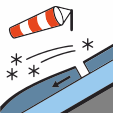
Snow drifted into slabs on lee slopes, below ridges and in gullies. Often easy to trigger.

Persistent weak layers

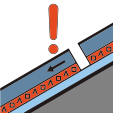
Buried weak layers that stay reactive for weeks. Hard to spot and capable of large avalanches.

Wet snow

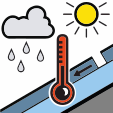
The snowpack loses strength as it warms or gets wet from rain. Typical in spring and in the afternoon.

Gliding snow

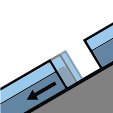
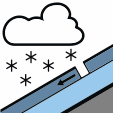
The whole snowpack slides on smooth ground. Glide cracks warn of it, but timing is unpredictable.